There is this "common consensus" among "experts" that the brain of pedophiles is cross wired. In the last paper by Cantor et al, the authors say that there is no "disconnection", but a "dysconnection". Right. Or are they wrong? The "experts" claim the following. If a "normal" person sees a child, the parental love is activated. But in a pedophile, it is the sexual love instead.
Ok, there are studies using functional MRI's and they report differences. I have also seen a meta-study where they listed all those studies and listed which regions were activated in pedophiles - there was not much consistency to see. This could be a case of p-value hacking, which i discussed earlier.
Back to the "common consensus" of cross-wiring, how much truth is there to this assumption? Is there really an activation of something completely different in parents than in pedophiles? That is what cross-wiring implies, or am i wrong?
What are the chances that evolution created a sexual love system and completely separated parental love? Testosterone, oestrogen, adrenaline, dopamine, serotonin, oxytocin, and vasopressin are the usual suspects for love hormones or the cocktail of them. Some say it is a myth that mothers get sexual aroused by breastfeeding their children. But it is oxytocin that controls the milk let down. One treatment option for social interaction orders involves a nasal spray containing oxytocin. Just by reading the article about oxytocin, one understands that there are no two separate love systems, there is only one. So what is parental love, then?
I have read several accounts of boy- and girllovers, who did not feel any sexual attraction to their own children. However, the friends of their children had the usual effects. The reason for that is the Westermarck effect. It renders long known acquaintances sexually inattractive. Is parental love the same as sexual love, but with brakes put on by the Westermarck effect? I think so. From an evolutionary points, it makes sense to reuse an existing system and to add some inhibitors to it than to evolve a brand new system for offspring caring.
Moreover, it makes sense to loose sexual interest in a person after getting to know him/her for a long time. In former times children of age 7 were supposed to fend for themselves, coincidentally the seventh year is also the one with the most breakups in marriages. Love hormones make us befriend a complete stranger. The own kids are around from day one, not exactly being strangers. This is another reason, why parents don't feel a sexual attraction, they are already close to their children. If they have not been close to their children, genetic sexual attraction happens, just think of oedipus.
So, what exactly is this cross-wiring talk about if there is nothing to cross?


2015-12-06
Pedophilia for dummies
First of all: Nobody makes the conscious decision to become a pedophile.
The argument "we are born that way" has been used by homosexuals to demand acceptance of homosexual love. It is not really an explanation, because it raises the question, why are some born this way? Together with "It's a sexual orientation" it is more of an activist slogan than a scientific explanation. The best current explanation is that something went wrong during the development. There is some evidence that it starts very early - even before birth.
Imagine that you are a normal boy heading for a straight heterosexual orientation. A "normal" boy plays with certain toys, later he plays football/soccer with other boys. At first, girls are icky and boys are afraid of catching girl cooties, with Valentine's day being an exception. However, something strange happens during puberty - boys are starting to behave irrationally. Parents told us to wait with it, teachers are against it, even pals are complaining that we spend less time with them. Nonetheless, spending time with a girl becomes important on it's own.
Stripping "gender" from the question, we could ask: What causes a typical behavior? Some behavior is so common typical that we have named them. Fear of flying is an example. As soon as the airplane starts moving, those affected freak out. In a rational discussion outside the plane, they will agree that the fear is irrational and somewhat silly. But that does not matter once the airplane starts moving. It is a consistent innate behavior very difficult to override. This is not an exception.
Think of the children!
This slogan is enough to mobilize and justify any action against pedophiles. Public figures demand actions to cope with the assumed pandemic. Some even demand that every pedophile be put to death - more or less merciful. If you still blame pedophiles for their "sick lifestyle", here is a question for you: Why would anyone want to be a pedophile? Trust me, it's not a desirable destiny. Do you really think that someone would choose that life?
Few are bothered to question the nature of pedophilia and what is causing it. When pedophiles are hunted, stigmatized and persecuted in the manner they are, it is obvious that this is not a choice.
Are they born this way?
The argument "we are born that way" has been used by homosexuals to demand acceptance of homosexual love. It is not really an explanation, because it raises the question, why are some born this way? Together with "It's a sexual orientation" it is more of an activist slogan than a scientific explanation. The best current explanation is that something went wrong during the development. There is some evidence that it starts very early - even before birth.
Think of it like a train derailment. There are tracks, which the train is supposed to ride on. And then there are obstacles and defects that can cause the train to leave the tracks. So, what went wrong with pedophiles? If we start asking about something "wrong", we should know what is "right". Hence, what is it that goes right in most people? What happens in people that don't turn out to be pedophiles? It is kind of an obvious mystery, since most people don't spend much time thinking about stuff that comes natural.
Sexual development - what is it exactly?
Imagine that you are a normal boy heading for a straight heterosexual orientation. A "normal" boy plays with certain toys, later he plays football/soccer with other boys. At first, girls are icky and boys are afraid of catching girl cooties, with Valentine's day being an exception. However, something strange happens during puberty - boys are starting to behave irrationally. Parents told us to wait with it, teachers are against it, even pals are complaining that we spend less time with them. Nonetheless, spending time with a girl becomes important on it's own.
Because "everyone" has this attraction, this is kind of normal and nobody is questioning it. Is it culture, or is it the expectation of others that drives "normal" boys to try to get the attention of girls again and again? If it were just a search for friendship, then we would see a 50/50 distribution of boy/girl and boy/boy couples. There are even fewer obstacles for a boy to befriend another boy than to befriend a girl.
Actually, several things are already known. Gay men tend to have more older brothers. There are hypotheses that explain how the influence happens, developed antibodies in the mother being the current favorite explanation. Gender atypical behavior during childhood is considered to be an indicator for later homosexuality. The latter statement is remarkable. Not only does it state a deviation from "the norm", it also states that certain behavior is "the norm" for a boy. Already as little boys, their behavior is supposed to follow some invisible tracks.
Gender typical behavior - but why?
Stripping "gender" from the question, we could ask: What causes a typical behavior? Some behavior is so common typical that we have named them. Fear of flying is an example. As soon as the airplane starts moving, those affected freak out. In a rational discussion outside the plane, they will agree that the fear is irrational and somewhat silly. But that does not matter once the airplane starts moving. It is a consistent innate behavior very difficult to override. This is not an exception.
Human behavior follows certain patterns, this is the very base of psychology. If we were able to just snap out of a depression, we wouldn't need psychiatric institutions. Often, we need to become aware, how much trouble a certain behavior will cause and we need help to avoid or handle those situations.
If we were animals, we would simply call it instincts. Many animals are born with a fully developed set of instincts. This is not the case with a human baby. Unlike a baby deer, it does not get up within a few hours after birth and follows the mother around. A human baby resembles more a fetus than a preteen child during the first year. Some animals can walk a few hours after birth and instinctively follow the flock. For most animals, instincts are like solid railway tracks guiding their behavior. They are so controlled by their instincts, that a lion jumping through a burning hoop is a circus sensation.
Instincts are considered to be non-existing in humans, since we are in general able to override them. This is taken to the extreme by the assumption that humans have a free will. The example of the fear of flying shows that this obviously is not the case. Few million years ago, our ancestors certainly had instincts and those instincts didn't disappear suddenly. And they haven't completely vanished.
How little instincts do we need?
Humans are superior to animals, because we can think and decide on a rational base what actions to take. That is the theory, in praxis we quite often behave in a certain manner that we are not aware of. Sometimes it is good for us, otherwise it can present an obstacle like the fear of flying. The fewer irrational behavior we are forced to act out, the better it is for us.
Instincts are in a way hard-wired knowledge how to behave in certain situations. Without hard-wired instincts, the appropriate behavior has to be learned. The freedom from instincts not only requires us to make rational decisions, but also allows us to adjust them in order to get anticipated outcomes. Without guiding instincts and learned knowledge, we are doomed to make stupid decisions. Hence, loosing instincts is not only an advantage, but it is a liability too. Using trial and error, we learned what was best for our survival. Hence, those with a lesser amount of instincts had a greater learning potential. This presents an evolutionary advantage leading to a higher survival rate for human genes.
Animals have instincts to a varying degree. Reptiles have a primitive brain and are completely instinct controlled. The higher up on the evolutionary stage the animals are, the less they are controlled by instincts and more able to learn things. It is no surprise that most trained animals are mammals.
Animals living in a stable environment tends to show very little variations. It is almost impossible to tell two penguins apart. Animals living in a changing environment show a greater variation. Individuals that are better adapted to a change will ensure the survival of the species, while the unfortunate die. Over time this will lead to a higher variation of individual characteristics in those species, which represents a higher flexibility. This is the reason for the noticeable individual characteristics among humans. Some of us are born with stronger instincts and have to suffer from fear of flying or similar compulsive behavior, while others enjoy a higher degree of free will.
How does evolution know where to stop?
It doesn't. Well, evolution does not stop before it is too late. Evolution is not about the survival of species or to make individuals comfortable in their environment, but about the survival of DNA. Humans are pushed by evolution towards the edge of losing all instincts, and due to the variation some are pushed over the edge. Those, who were too far on the other side, would not pass down their DNA. Evolution comes with a price tag attached, the dead end of an DNA-line. It is like a tree, where only few branches are allowed to continue to grow, while others are cut back.
As it seems, a certain minimal amount of instincts is necessary for procreation. Boys need to find girls. That is why boys start to behave irrationally during puberty, even when they were angel-like to their parents during previous years. The current society makes it hard for them: child sexuality is not encouraged and abstinence-only sex education is on the program in some countries. Hence, the instinct of chasing girls meets a lot of obstacles, experiences headwind.
Should we expect everyone to develop a "normal" heterosexual orientation? Some think that gender is a social construct and feminists claim men and women to be equal. Moreover, many romantics claim that it was the personality that attracted them to their spouse. If the existence of a vagina or penis is that insignificant, shouldn't we be equally attracted to men and women? I mean, if we downplay the importance of the gender/sex, shouldn't we see like a 50% prevalence of homosexuality?
Evolution does not like 50% homosexuality, it is simply not sustainable. It would mean that 50% of the genes are pushed over the edge and are not passed down. During the evolution humans lost much of the intensity of instincts. The behavior became more and more rational and that was an advantage. This also meant that the gender of the significant other half became less important. We are more attracted to the personality than to the outlook of intercourse. At the same time, sex became more versatile than just as a means to procreation. Intimacy creates strong social bonds. Hence, evolution drove humans away from the 100% heterosexuality towards a point where the advantage of free will is balanced by procreation failure.
So what went wrong in pedophiles?
Nothing! Everything went according to the plan. That means the plan of evolution. Evolution does not care about individuals, only about the survival of genes. Individuals are just a means for procreation. Fish have many thousand offsprings, most end up being prey for others. For evolution it is ok that just enough individuals make it into adulthood.
Flexibility was and is a necessity for humans. In order to adapt to the changing environment, we show rather big differences between individuals, we are taller or shorter, we have different skin colour, and we lost much of the control instincts had over our behavior. Variance is part of the evolutionary game. This means also variance in the strength of certain instincts, among them the instinct that drives boys towards girls during puberty.
To be honest, this post is actually "paraphilia for dummies" - i never talked why pedophiles prefer the company of children. Most think it is for sexual gratification only, but this is wrong. The company of children averts aggression of bullies, children are very emotional and might satisfy the demands of someone with a more intense emotional life. There are in fact many reasons why adults turn towards children and turn the back to adults. The current stigmatization is one of them. Children don't judge someone based on media incited hysteria, they judge people according to their actions.
To be honest, this post is actually "paraphilia for dummies" - i never talked why pedophiles prefer the company of children. Most think it is for sexual gratification only, but this is wrong. The company of children averts aggression of bullies, children are very emotional and might satisfy the demands of someone with a more intense emotional life. There are in fact many reasons why adults turn towards children and turn the back to adults. The current stigmatization is one of them. Children don't judge someone based on media incited hysteria, they judge people according to their actions.
2015-11-22
Why does the mystical p-value sometimes do not tell the truth?
P-values seem to carry an importance in science paper, which the layman does not understand. Instead of going into the details of its definition, i'm using coin tosses as an example. Most coins are balanced, which means each side is equally likely to end up in a coin toss - which makes them perfect for the use in random experiments.
My experiment is the prediction of a coin toss. Other experiments are less random, like measuring the height or intelligence of a group of people. The big question is what is random or not?
The correct order of business would be:
The experiment
My experiment is the prediction of a coin toss. Other experiments are less random, like measuring the height or intelligence of a group of people. The big question is what is random or not?
The correct order of business would be:
- Stating the hypothesis - here predicting the outcome to be heads.
- Carrying out the experiment - here flipping the coin.
- Observing the results - here: (just for the sake), it was tails.
- Publishing the results - here: writing a paper in any case, even when the hypothesis got not confirmed.
What would we see in the scientific literature? About 50 percent of the papers are reporting heads, the other 50 percent reporting tails and everybody would understand that the outcome of flipping coins is random. This is something we seldom see in the scientific literature.
The successful scientist
If my career depends on the publication of successful papers, then papers with negative results are not desirable. My reputation would get damaged, if i publish a report where the experiment does not support my hypothesis. This pressure results in papers, where the outcome would be tails, if the hypothesis was tails; or heads if the hypothesis was heads.
Another way to ensure a successful paper is to postpone the making of a hypothesis until after the analysis is carried out. This procedure is also known as the Texas sharpshooter fallacy. Obviously this is wrong. However, data dredging is quite common.
In my case, i made a hypothesis on the outcome of coin flipping. I predict heads assuming that the coin will always land this way - which is my hypothesis. The null hypothesis assumes that the outcome is random, giving me a 50% chance to be right.
Making it significant
My paper only counts if my findings are statistically significant. Often a threshold of 0.05 is employed. In order to reach that level, i would have to predict the outcome of 5 subsequent coin tosses. Flipping the coin 5 times gives a probability of 1/2*1/2*1/2*1/2*1/2=1/32 or a chance of 3.125%. Hence, the more details i predict, the more significant would a success be.
Some scientific papers do execute an extensive data analysis, finding not yet seen details. He who seeks finds. If one looks for details shared by only 5% of the studied subjects, then one of such details is statistically (p<0.05) significant. A detail shared by only 1% becomes statistically (p<0.01) significant.
In my case, i would postpone the hypothesis making until after my data analysis is carried out. Many journals do not require me to state the order of business, hence i get away with a vague description how my hypothesis came into existence. As i continued the coin flipping business, the result became tails-tails-heads-tails-heads (TTHTH). Publishing this would give me a desired publication, but 31 out of 32 replication trials will be unable to repeat my experiment.
Some experiments are expensive to carry out. Sharing lab-results is a nice gesture among scientists. It is obvious that using my "lab-results" will enable you to confirm my results. If you insist on using your lab-results, it would come with the disastrous results! Since my results were statistically significant, everybody would assume that you are an inexperienced scientist.
One in twenty details should turn out to be p<0.05 statistically significant.
Give me a hypothesis or lab-results, but not both!
P-values give an indication how likely a outcome is, if it were random. It is calculated like a probability. Using the correct formula does not ensure its correctness. How likely is a certain outcome of 5 coin tosses? It is 1/32. However, if i know that the first one is tails, it changes. Outcomes starting with heads are no longer likely, all others increased their likelihood to 1/16. At this point, my results would no longer be statistically significant. This change of probabilities is the achilles heal of conditional probabilities - they change when new information is obtained.
One could claim to have calculated the outcomes of 5 coin tosses before the experiment, hence they numbers should still be valid. However, i have picked out one special number (TTHTH). By singling out this number, i applied an after-the-fact selection - which is an additional condition, hence the value should change. In my case, the value increases to 1.0. This is the probability to see tails-tails-heads-tails-heads, when my coin fell tails-tails-heads-tails-heads.
What is left?
As a reader of a scientific paper i have to skip statements about statistical significance, when the authors were too lazy to describe when exactly they came up with the hypothesis. Without the p-values, only the existence of details can be acknowledged. It could be a property of the sample, or it could indeed indicate some correlation.
If a certain scientist only publishes papers on successful experiments, then it could mean two things:
- the scientist is cheating, making up the hypothesis after the fact,
- the outcome is less random than assumed.
An unlucky scientist studying a random phenomenon should publish results according to the random distribution. In the coin flipping science field, halv the papers should report a failing. Assuming all scientists are using the same coin, and only 25% report a failure - then the assumption of a balanced coin seems to be wrong. In this case, the coin is likely to heavier on one side. Even though the reports were pair-wise contradicting, together they would give a more correct picture of the randomness.
My checklist:
- When was the hypothesis made?
- Has data material used for hypothesis making reused in the analysis?
- How much data dredging has been carried out?
- Have the author been picking out details from the examination?
- How many similar details are there?
- Where are the failures?
Background
There are some scientific papers out, which try to identify pedophiles as a group. As it seems the authors are not aware of the pitfalls of data dredging and the Texas shooter fallacy. As a results some characteristics of pedophiles are given as "statistically significant", which are at least doubtful. Since those results contribute to the stigmatization of pedophiles, such papers are in my opinion unethical.
2015-10-26
Making sense of James Cantor's research
James Cantor's articles are heavily discussed in the pedophile community. He is a researcher at CAMH and carries out research using forensic samples, meaning men who are caught in the legal system. Among his findings are that on average: their IQ is lower, they are missing white matter, they are shorter, have craniofacial anomalies and shorter legs. Of course the tall, smart, beautiful pedos cry out. His articles are scrutinized and critiques have been written pointing out holes. Ok, i might be too stupid to date women, but how exactly do short legs cause pedophilia? Craniofacial anomalies or simply ugliness might ruin my chances of getting laid, but i would still chase women and not children. What could be behind all those research findings?
Preamble
Many researchers look to chimpanzees and bonobos, our closest cousins in the animal kingdom, for some clues. Other sex researchers like Jim Pfaus use rats to study sexual behavior. However, there is one huge difference between most animals and humans. Humans are neotenous, more than cats and dogs. Neoteny means the retention of juvenile features. It does not mean that adults look childish. It means that without neoteny our heads should look much more like grown up chimpanzees and not like those of chimpanzee babies. We should have larger teeth, a smaller brain, and a bigger fang.
There is little to be found on the internet how neoteny manifests itself. The best explanation is a retarded development, meaning that all developmental processes run with a much reduced speed. Different processes run at different speeds. Some processes never finish, like the skull bone fusion which still goes on in the ninth decade. Compared with the mammal model, human processes take 5 to 15 times more time. According to that model, humans should be born after 21 month of gestation. Since the head would be too big by then, humans are born at the latest possible moment, when the baby's head just passes through the birth canal. After birth the baby continues to grow at the same rate for the next year. One of the processes taking longer time is the brain maturation, 90% completed by age 10, but almost finished first in the mid-twenties, give or take a few years.
Human instincts
Psychologist Abraham Maslow argued that humans no longer have instincts because we have the ability to override them in certain situations. The criteria for instincts cited in this wikipedia article create a false dichotomy. Either it's an instinct or should be considered a drive, but the latter is defined much different by Drive theory. The biggest counter argument against the non-existence of instincts is the fact that psychology works. Psychology works because human behavior follows rules. Patients in psychiatric care have difficulties overriding certain "innate behavior" (aka instincts). Probably the reason for the renaming into "innate behavior" might be related to the illusion of a free will. Free will denotes the idea that humans can do and behave in the way they want, ultimately meaning that all actions are deliberate and thought through.
During the human evolution the increasing intelligence made us to a lesser degree the marionettes of instincts. The notion of free will represents the ultimate end of this development. This development will affect all instincts, some more other less. Some instincts are necessary for the survival of the species, like the sexual mating instinct. Hence, the human evolution weakened those instincts to the point where they are just strong enough for the genes to survive. Evolution works by variation: some get stronger, while others get weaker instincts. Those men, who have sex with strange women when completely drunk, got a higher amount of sexual mating instincts. Those, who develop a paraphilia instead of a healthy heterosexuality, probably got less than necessary. As a consequence, the appearance of not sufficiently strong enough instincts is part of evolution. Basically, this means that those instincts get overridden before they manifest themselves.
The link between instincts and neoteny lies in the way our brain develops. Most animals are born with most instincts functioning. Their brains are fully myelinated at birth, while humans are born with mostly unmyelinated brains. During the first years the myelination takes place. That means neuroglia cells are formed and their fatty parts show up as white spots on T1-sMRI. Neuroglia cells are shielding the axons of neurons, hence they are part of the white matter or the so called connecting tissue. Neoteny delays the manifestation of instincts. However, it seems that there are critical periods during the development. If a skill or behavior is not learned during such a time window, it is hard if not impossible to catch up.
The research findings
One of the better known results regarding pedophiles is the missing white matter. Sometimes it is also referred to as cross-wiring, since the researchers believe that instead of parental instincts, sexual instincts are activated. This is an overly simplistic view and there is no explanation why the cable instead of going to A goes to B instead. If it were a random cross-wiring, we should see an activation of the whole spectrum of instincts.
The craniofacial findings point to prenatal events, also called prenatal insults. Skin cells and neurons differentiate in the same way during embryogenesis before the blastula folds inwards and the spinal cord and brain are formed. If the development of skin cells gets disturbed during that period, it is likely that it affected neural cells as well. The observed correlation has been interpreted as an indicator for prenatal causes of pedophilia. Another anomaly is the testosterone level during certain critical prenatal periods. Getting the wrong amount of it and something goes wrong. It has been experimentally shown in rats (Jim Pfaus & Co) and there has been a longitudinal study in Denmark confirming it.
I'm wondering, whether the testosterone level in humans is similar to other mammals. The slowed down development in humans is caused by something or something necessary for the development is absent. Gaffney and Berlin reported a dysfunction of the hypothalamic–pituitary–gonadal axis in pedophiles, which again is important for testosterone levels. Testosterone breaks down into estradiol, which seem to have far reaching influence.
The latest papers propose a disturbance in the development to be the cause for some paraphilias. If we add the reasonable assumption that exclusive pedophiles are not interested in women, then we can conclude that the heterosexual instinct did not manifest itself. The development of the human sexual mating instinct, aka heterosexual orientation, got derailed. As with train derailments there might be multiple ways of that happening. This is the reason why some meta-studies report many different and sometimes conflicting results. Trains can go with a high velocity into a tight turn, rails can be deformed, the rail bed can have broken away, the wheels might lose contact, the bogie can oscillate - all of them possible causes for a train derailment.
Non-exclusive pedophile men are attracted to women, hence there is a working instinct, but the erotic attraction includes more than women. Normally, only the sight or scent of women should cause arousal. This arousal seems to be learned - clues of the preferred partner get erotized. John Money calls this disturbance a vandalization of the lovemap, which are supposedly formed around the age of 6. This would implicate events in early childhood as possible causes. Again weak instincts might have enable those developments, since they didn't offer much resistance to aberration.
Weak human instincts are not mainstream psychology. Common for paraphilia is the absence of a healthy heterosexual orientation. Hence, it seems kinda obvious to assume that something went wrong with the heterosexual mating instinct. This assumption is simple, it is supported by human evolution, the existence of human neoteny and the limited degree of free will among humans. So instincts failed to work as they should. I call it the faulty neoteny hypothesis.
Disclaimer
This is amateur research, making sense of research papers. As such it is not backed by a financed scientific study, but based on logic and scientific literature. As an amateur i'm free to pursue ideas that are not mainstream.
2015-10-18
The first pedophile
Is this a fantasy of a pedophile or does it make sense?
The idea in this post came like a stroke last christmas. Pedophilia is a destiny which is a heavy burden to carry. It does not make sense to be attracted to children nowadays. It does not make sense according to contemporary standards, but did it make sense 5000 years ago? Delving into internet i discovered the following.
Pedophilia is not a recent phenomenon, Michael Jackson was not the first one to have eyes for boys in the magic years between being a little boy and becoming a man. Leonardo da Vinci had eyes for his Salai, and he too was not the first. The greeks didn't invent pederasty, it had already conquered the world. The Japanese had the love for boys, apparently for over thousand years. This love for boys can be found in cultures all over the world. If a behavioral trait has spread throughout the world, it is believed to be more than 50.000 years old. Ergo: let's go back in time, much back in fact.
 The picture to left shows a young immature chimpanzee. The contrast to adult chimpanzees is quite markant. Actually adult humans resemble chimpanzee babies much more than mature chimpanzees, which is denoted as physical neoteny. Neoteny itselfs denotes the retention of juvenile characteristics.
The Descent of Chester
The story of the descent of Chester is a humorous explanation why evolution allowed the existence of pedophiles and how pedophiles survived natural selection. Even though written as an satirical essay it contains several ideas on the survival of genes. Sometimes laymen interpret evolution quite narrow, when giving birth to children is already counted as success. Chester in this story makes sure that related children survive. This worker bee hypothesis has also been used to explain the acceptance of Fa'afafine. Another support for this hypothesis is the fact that mothers of homosexual children tend to give birth to more children. These explanations center around the value of nutrition for survival.
However, the same can be applied to all animals, hence we should find homosexuality and pedophilia to the same extend in the animal kingdom. Homosexual behavior can be observed, even sexual interaction with immature youth is common, but not in the same manner as in humans. Homosexual behavior is observed in the absence of females or in captivity. Researchers have tried to instill homosexuality as a preference for males in rats and have failed. Sexual behavior with immature youth is found in species that are not at all discriminatory in sexual partner selection, but a preference for immature partners is not evident.
What happened to homo habilis & Co?
There are some peculiarities in the human evolution. Humans share a last common ancestor with chimpanzees and bonobos. From comparison with them, we can infer that certain events happened during the human evolution. Artifacts like skeletons provide hints where to place them on the timeline. From those artifacts we know that the human brain increased in size twice during the evolution.
The first increase happened with homo erectus 1.8 million years ago , who had to counter environmental changes. In mobbing is human heritage i tried to explain what happened to them. Homo ergaster most likely self-domesticated himself, leading to groups that were more successful at fighting off predatory animals. Analysis of his skull shows more neotenous features than the chimpanzee skull. The famous russian silver fox experiment also lead to neotenous features as a result of a selection based on behavior. If homo ergaster became neotenous, then the reason could have been a self-domestication process, which we know has happened in the human past.
Hypothesis about human evolution
It is impossible to prove anything about the behavior of human ancestors, since no documentation ever existed or survived the tooth of time. Artifacts can only be found where the conditions were right for conservation. Human tissue or tools made out of wood and similar did not survive. Due to that most commonly acknowledged theories are based on simple assumptions and correlations with other events. The principle of Occam's razor is used to select some hypothesis as more likely.
Fortunately, there are some facts, which we know to be true. First of all, humans became intelligent and are able to use complicated tools. Second, we master a huge volume of knowledge. Finally, homo sapiens evolved into the shape of modern humans. The latter implies the neotenous character.
Neoteny - the retention of juvenile features
 The picture to left shows a young immature chimpanzee. The contrast to adult chimpanzees is quite markant. Actually adult humans resemble chimpanzee babies much more than mature chimpanzees, which is denoted as physical neoteny. Neoteny itselfs denotes the retention of juvenile characteristics.
How does neoteny appear? There is little to be found about it, but it seems to be related to a slower maturation speed. There exists a mammal model that predicts when certain developmental events are supposed to happen. Compared to that model, humans are maturing at a slower speed, between 5 and 15 times slower. According to that humans never done with growing up. Even in the ninth decade, some skull bone fusion processes are still at work.
Not only does a human mature at a slower speed than the mammal model predicts, but different parts mature at different speeds. The brain maturation is one of the slower processes. Several human peculiarities are due to that. Human instincts are dwindling and weak, interfering less with a rational behavior than in animals. However, some instincts are necessary and an insufficient instinct has undesirable outcomes. And again, the russian silver fox experiment did some interesting observations. Some neotenous foxes neglected their offspring.
The second brain size increase
The second brain size increase happened presumably during the Lower Palaeolithic era (800 000 years ago) leading to homo heidelbergensis. The placement of either on the timeline is somewhat uncertain, but the correlation makes sense. Homo habilis already had the ability to carry tools around unlike tool using animals. The usual sequence in animals is that they are first confronted with a problem and then start using tools. Not only are they using available items, but it has been observed that they modify items to fit for the purpose. Sticks are selected and sometimes modified for retrieval or for foraging. After the animals got what they wanted they usually discard the used tool. Since stone tools have been found together with skeletons, we know that they have been carried around even when there was no usage during the transport.
If there had been a "wood age" before the stone age, then we wouldn't know about it. It is possible that our ancestors had been using wooden tools before stone tools. In this case, the second brain increase could have happened earlier.
Tool making requires understanding and the ability to learn. I have seen a BBC documentary where a professor specialized in anthropology showed the presenter how to cut a stone for making a stone axe. The presenter surely had attended school and knew a lot about physics. The professor also told the presenter how to do certain steps, both spoke english and were quite intelligent. Even with those favorable abilities it took about half an hour to get the lesson across. Prof. Brian Cox tried it once to cut a stone without any instructions and gave up. He needed advice from some expert. Knifes and longer cutting tools require careful craftsmanship, where several flakes have to be cut off. This requires remarkable skills, not easy to teach even today.
In order to simulate ancient conditions we need to modify the situation drastically. First of all, no physics knowledge is allowed. Language was not yet invented. There were no books and no schools. And we have to reduce the intelligence level in both participants. Instead of a professor teaching an intelligent presenter we should consider a 5 year old teaching a 2 year old how to do that. The time needed to get the lesson across would be much larger and requiring the student to spent considerable amount of time with the teacher.
In the animal kingdom the youths learn from their parents. The sex of the offspring does not matter since all animals have to hunt, assuming no division of labour. If there is a sexual division of labour, then it is mostly instinctive behavior not requiring much learning. The situation is different with humans. First of all do humans give birth to fewer offspring. Moreover, some have only daughters while others only have sons. So, what is the best strategy to transfer knowledge to the next generation?
The kid could learn from the same sex parent. Any imbalance of the sex will lead to a loss of knowledge in that case. If kids leave the parental care and look for a same-sex teacher in the tribe, then the sex balance is almost equal. Moreover, if kids learn from several teachers, knowledge gets distributed. From a game theoretical point of view, kids learning from unrelated same-sex members of the band have an advantage. Since knowledge means a higher survival rate, a band where knowledge is transferred to unrelated children gives a higher chance to their genes.
The first pedophile
There are DSM/ICD definitions of pedophilia and hebephilia. The border between those two lies at puberty, which ignores the basic fact that most boylovers are attracted to boys at that border. Boylovers often ask themselves, whether they are pedophiles or not. Compared with ancient times puberty nowadays has an earlier onset. I sometimes wonder when ancient greek boys went through puberty. It seems like they were much older than contemporary boys in puberty. This would change the definition of ancient pederasty. In the following i do not differentiate due to that reason. Moreover, i don't assume a sexual preference for children in the following.
The transfer of knowledge like the making of stone tools requires a teacher - someone who spends a considerable amount of time with the student. Nowadays teachers are paid and teaching became a profession. This was not the case in the lower palaeolithic era. Everybody had to teach the craftsmanship one possessed unlike today, where some specialized teachers teach the profession of others.
Rind&Yuill in 2012 showed that hebephilic interest is an evolved capacity, and pointed out some commonalities in cross cultural studies. T. Vanggaard wrote in Phallós about semen culture and masculinity. The mature-immature homosexual relationships were an institution to transfer manhood from adults to boys. Only in such relationship a boy would become a man and in ancient time it was seen as a stigma not to become an erômenos. This has changed with Plato. Before Plato, the institution of pederasty was ritualized and served a well known purpose. After Plato, the sexual gratification got condemned and the former purpose lost. Moreover, the condemnation requires that the manhood building aspect has to be ignored.
How did the teacher-student or master-apprentice relationship came together in lower palaeolithic times? It seems likely that those relationships were formed spontaneously. They were just spending more and more time together without realizing the nature of their relationship. Boylovers jokingly claim that sexy boys are the cause of pedophilia. This is not far from the truth. A dedicated teacher is more efficient than an indifferent one. Hence, students that catch the interest of the teacher got a more enthusiastic education. If a red nose were enough to cause such an interest, we all would be running around with red noses. What characteristics could probably have been preferred?
If we compare chimpanzees with humans, there is a long list of differences. Humans have eyes that are white around the iris. That makes it easy to guess what the other is looking at. Is the student banging 2 stones together to imitate the noise or actually aiming at a fault line? It is certainly easier to teach someone whose mind is easier to read. This too is supported by a hairless face. Humans faces are able to express emotions due to the amount of facial muscle, by the way the only muscles in the human body attached to skin.
Lautmann in "Lust am Kinde" notes that boylovers admire the boy's personality while girllovers admire beauty. Of course, personality is not everything, the boys body is admired too. The statues of the ancient greeks idolized the young man's body. It is likely that a combination of physical and behavioral attributes attracted the teacher. And as always, there will be a competition for attention. This can be seen in any group of children. Boys will compete with each other for the sole attention of a popular group leader, while group leaders will compete in attracting the most desired child.
A child attracting a teacher has to show its abilities. It might be a bit far fetched, but entertaining adults is a perfect opportunity to show intelligence, the ability to learn and present oneself. This is quite similar to courtship behavior between mates.
Natural selection in humans
Evolution works in many ways. Sexual selection is a narrow interpretation, where the choice of a mate decides over the survival of genes. The only thing that counts is the survival of genes. In the simplest case, the survival of the individual until reproduction is sufficient (see fishes). Care of genetically related family members is related to kin selection. However, if one supports distant or not-related family members based on the existence of certain pleasant traits, then those traits will be selected for.
It has been argued that the human brain is a result of sexual selection, where women and men have used their display of intelligence in courtship. So where are the nerds with models as girl friends? It is kind of obvious that this explanation is flawed. Hence, the question is who has selected somebody else for his/her brains? Moreover, it is not necessary for the selecting individual to pass his genes on - that is only required for the one with the brain.
The common explanation how women select brainier men is based on the men's results during hunts. A common mistake is to ascribe a certain development to one and only one cause. That women preferred men who contributed more to society does not preclude other causes. It is not like women evaluated men, but men evaluated each other and build their mutual social status based on that assessment. It is common knowledge that women tend to prefer men of higher social standing. Hence, if men elevated certain boys into the ranks of manhood, then women would prefer those. The rituals of manhood in native cultures marked youths as to be eligible. Women were taught that only men with the right markings are suitable as mates. This is a case where the selection process is carried out within one sex, but has an effect on the passing of genes.
In my humble opinion the mature-immature relationships had a beneficial effect. Not only did the existence count for the transfer of knowledge, but also the length of the apprenticeship had an effect. Child mortality had been high and survival depended on the income of the father. A longer apprenticeship meant higher education and probably a higher social status and with it a higher survival rate of children. This type of relationship usually ended when the younger part became too old and was supposed to move on. When did the younger partner became too old? Presumably when the secondary sexual characteristics became visible. Another reason for this close relationship to end is the fact that a mature same sex partner represents sexual competition. Exclusive pedophilia seemed to have been quite rare. Often the men in those relationships were married or moved on to marry a woman after breakup.
One evidence pointing in that direction is the fact that onset of puberty in boys is later than in girls. Moreover, the onset of puberty is earlier today than some hundred years ago. The decline started about the same time when public schools were introduced and the apprenticeship system was replaced by more institutionalized education systems like university or unskilled labour in factories. Following that explanation, the current decline is not caused by some environmental conditions, but is the normal return to the state without an evolutionary pressure. The survival rate of offspring no longer depends on the length of the apprenticeship with a mentor. The evolutionary pressure also disappeared due to the reduced child mortality.
In this post i focus on the man-boy relationship, but one might argue that the same must be valid for woman-girl relationships in the past. But there are some major differences. It's not without reason that men are from mars while women descent from venus. First, women are child bearing and therefore considered to be too precious to be subjected to danger. The sexual division of labour might have placed a heavy burden on women, but quick decisions were only required from men. Usually women and children are protected by men who have to defend the village. This can also be noticed today. Women are comfortable in positions where few final decisions are made. Typical women areas are places where decision can be overthrown or remade, or when it is possible to base decision on a time consuming consent building process. Boys have to be teached to make the right decision the first time, while girls are imitating women and have the opportunity to adjust their decisions. Hence, the evolutionary pressure was heavier on boys than on girls. That girls mature later than the mammal model predicts can be due to the little pressure put on them and/or due to the genetical linkage between females and males.
Natural selection works in many ways. In ancient Greece stigma was attached to those who didn't got an erômenos. Hence, it was not only men selecting boys and therefore deciding which boy genes moved on, but also boys deciding over the social standing of young men. Every master of a craftsmanship was required to have apprentices. The failure to attract candidates was a professional failure and lead to exclusion from the profession and loss of income. Therefore one can assume a co-evolution: boys getting attractive to men, and men becoming accommodating to the needs of boys. The former denotes the eagerness and willingness to learn while the latter means caretaking, teaching and mentoring in all aspects of life.
Q: Why don't humans have a baculum?
A: Because pedophiles are a pain in the ass.
Modern reminiscents
Even today, children are fanatic about superheros and heros. The majority of boys idolizes football players. Variants of football can be found in native cultures, where an object is kicked around, intercepted and driven towards a goal. Sometimes the ball is decorated with feathers or skin. Young boys are eager to participate in games with older boys. Not only that, but emotions are set into high gear. Imagine now that boys were free to roam society without being bound to their families.
Men shave their beards, while women apply makeup. The result in both cases is that the person looks younger. Why is that? It is an unconscious signal to others that we are willing to accommodate them. We signal that we are agreeable and desire an honest conversation. The opposite in men are those with long beards. In many cultures long beards are reserved for scholarly persons, who can dispense knowledge. The opposite appearance signals an openness to acquire knowledge or listening skills necessary for agreements. Salesmen tend to be shaved for that reason.
Sometimes, one can read that this behavior is paedomorphic and has something to do with the Kindchenschema - the one which is supposed to elicit help. Some even reason that this kind of behavior might have turned some into pedophiles - which is utterly nonsense. The kindchenschema does not elicit help, but lowers aggression thresholds. The absence of a beard makes also hiding of emotions more difficult. Hence, a shaved man appears to be more honest and more trustworthy if the social standing is unknown.
Men shave their beards, while women apply makeup. The result in both cases is that the person looks younger. Why is that? It is an unconscious signal to others that we are willing to accommodate them. We signal that we are agreeable and desire an honest conversation. The opposite in men are those with long beards. In many cultures long beards are reserved for scholarly persons, who can dispense knowledge. The opposite appearance signals an openness to acquire knowledge or listening skills necessary for agreements. Salesmen tend to be shaved for that reason.
Conclusion
Same-sex pedophilic behavior has been with us for 800,000 years, the time when the last brain size increase happened. It is probably related to the transfer of knowledge and masculinity to the next generation, which is the main theme of the ancient greek pederasty and semen-culture reported in cross-cultural studies.
If this were true, all men should feel some erotic attraction towards boys, since it has been a necessity for the transfer of knowledge in the past. Current behavior like men shaving beards, and the particularities with the onset of puberty in girls and boys nowadays and in the past, indicates this to be true.
If this were true, all men should feel some erotic attraction towards boys, since it has been a necessity for the transfer of knowledge in the past. Current behavior like men shaving beards, and the particularities with the onset of puberty in girls and boys nowadays and in the past, indicates this to be true.
Moreover, boylovers should not be ashamed of their attraction towards boys. It it nothing abnormal, but part of the essence of humanity. The idolization of youth was common in ancient Greece and there is a heavy weighting reason for that.
Disclaimer
This is amateur peodphilia research, which means there is no study to back up the claims. This post presents a hypothesis with the attempt to explain pedophilia related phenomena.
2015-10-03
Pedophiles are "superhuman"
I'm not talking about Superman or Ironman, but about the quality that makes humans different from other animals.
The superpower of humans is the ability to make well thought through decisions. Well, most of the time. Humans still follow gut feelings and are somewhat irrational. I blame this irrationality on the dwindling human instincts. The weaker the instincts the less are decision influenced by gut feelings. Hence the weaker the instincts get, the more human one becomes. As it seems the human instincts are not equally strong in everybody.
There was it on the news the other day that a women got raped late at night and the guy didn't remembered it due to being drunk. Alcohol lowers inhibition and cognition and irrationality takes over. One could say that this guy had more than the normal amount of instincts and behaved more like an animal. So this is an example for a variation to the stronger side. How does a variation to the weaker side look like? If instincts are too weak, then some behavioral development will be affected. One of such behaviors is for boys to get an attraction to women during puberty. Common for all paraphilias is that one does not develop a healthy heterosexual orientation. Hence, if one looks for a cause of a particular paraphilia, one should look what prevented heterosexual development in the first place.
My theory is that dwindling human instincts are responsible for paraphilias. A process related to neoteny is responsible for instincts getting so weak that gut feelings do not much influence human decisions. This is the process that makes us human. Since this weakens instincts in pedophiles, they certainly must be superhuman.
2015-09-16
Neoteny, gut feeling, and dwindling human instincts
Human have a free will, right? My gut feeling tells me no. The field of psychology is a science that figures out what makes humans tick. If humans had a free will, we would just snap out of a deep depression and be happy at will. Psychologist wouldn't have a job to go to. It simply does not work that way. There is even a book about the science of fear. It shows how gut feeling interferes with rational thinking and even leads to riskier behavior.
The human gut feeling are the remains of fully functional instincts. Instincts guide behavior in animals, the perceived situation triggers one or another response. Reflexes are more simpler, sensory input leads to a motoric action. Instincts are like an advanced version of it.
Instincts are good for animals, but not so good for humans. We live in a more complicated world, where our actions should not solely be guided by gut feelings. As mentioned in the book, our gut feeling might be a disadvantage. In difference to animals, humans possess rational thinking, which leads to better outcomes.
Neoteny is an explanation for the dwindling human instincts. While most animals are born with a fully myelinated brain, humans are not. Those animals join the flock after a short rest following birth and show instinctive behavior. Newborn humans show few reflexes and very few instincts.
Neoteny works by slowing down maturation of the affected parts up to the point of standstill. The processes responsible for development simply work at a slower speed. Myelination of the human brain does not happen in uterus, it takes many years of human life. During this time, we learn how to cope with the challenges our environment throws at us, and we develop strategies for survival. Those strategies can work along with our instincts or work against them.
Neoteny appeared due to evolution. This means the maturation processes were faster in some individuals, and slower in others. Those small variations are enough to give an advantage to the ones going into the right direction. Moreover, not all maturation processes are slowed down equally. Compared with chimpanzees the body needs like 3 times the amount to mature, while the brain needs several more times.
Rebellion during the teenage years are a good example for instincts. The irrational behavior is exactly that: irrational. It often is attributed to raging hormones, but is better explained by instincts. The orientation towards age peers and conforming to their pressure is more important than obedience to parents. Even more important is the attraction towards the opposite sex. Parents might forbid it and age peers might ridicule one, nevertheless the opposite sex must be conquered. Some teenagers are more obsessed with it than others. This is so irrational, that instincts must be responsible for that. We all know how teenagers behave who were gifted with more than the usual amount of teenagers instincts.
Those, who have a lesser amount of teenage instincts, will behave according to the learned norms and conform to requests. Since the current society wants to keep adolescents immature for a prolonged time, those children will stay children. Stunted psychological or emotional development is real. There are several theories why this happens, but i'm missing the role instincts play. One very important instinct is the heterosexual mating instinct. If that one does not manifest, then the genes don't make it into the next generation. This is the disadvantage that evolution uses to stop the dwindling instincts from disappearing altogether.
Since i'm always seeking the connection to pedophilia, this is no exception. Quite too often i found on the internet the notion that boylovers see themselves as emotionally young. One even wrote that it is tiring to pretend to be an adult all the time. If one feels himself as a teenaged boy, one probably is stunted in his emotional development. It might be as simple as this. The heterosexual mating instinct is too weak in pedophiles. The obstacles for a normal heterosexual relationships offer too much a resistance for this instinct to overcome. Those obstacles might come in different forms. Sometimes the family environment is diametral to the romantic advances of the child, sometimes it is just missed opportunities. Common factor is the absence of "raging hormones".
2015-09-06
We are using just 10% of the brain, aren't we?
Well, I broke a bone the other day and wondered, wouldn't it have been nice to have an extra pair of arms. It surely would help opening a bottle - the one arm is up to no use. Luckily I have like 90% spare brain capacity, switched that on and started thinking.
Evolution gave us only two arms, why? When did that happened? Of course, some million years ago. But then, our ancestors didn't walked upright, so we had 4 feets more or less. It would have been nice if we had insects as ancestors, but reptiles are just fine. Reptiles like alligators have this fine art of moving. One paws goes down on each side, the other one goes up by a twist of the torso. Another twist of the body and the whole animal has moved forward. One can image how evolution had pity with a wriggling worm, adding some more tissue here and there.
Ok, evolution didn't foresee my accident and didn't anticipate my dilemma with my broken bone. Maybe I'm not that important after all. It would have been nice having a kevlar skin and a skeleton out of adamantium. Wouldn't that be nice, having an accident, getting up, locking down on the smashed concrete and go on with life? No, humans have to break bones. What they told me on the emergency room seems to be true - I'm not the only one. Apparently, humans break bones all the time. Whoever designed the human body should be fired, at least it is not an intelligent design.
Luckily I have 90% spare brain capacity, so I can think about that too. What kind of calculation did evolution resort to when it calculated the bone thickness. As it turned out, it didn't used Excel - this time no blame on Microsoft. But it makes no sense, if we have intelligence in abundance, then we should have enough bone tissue too.
Everything in nature is there for a reason, right? But evolution does not reason, it is not an entity that has a PhD in structural design. Evolution does not exist! Surprised? It is nothing more than a set of laws that dictate what survives and what not. The magic ingredients are variations. Some guy gets bigger bones. I would loved to have been that guy with twice the bone thickness. Although it would have required much more energy to escape those bullies during childhood. But I guess I'm on the thin bone side. That is how evolution selected the right bone size for humans, simply by trial and error.
As it turns out, evolution uses this simple method for everything. Everything? Haven't I just used spare brain capacity? Isn't the brain an exception? As a matter of fact, there is a very good reason for not being an exception. The human brain uses twenty percent of the oxygen. This is so much that we need to cook our meals in order to get enough nutrition. Everybody with a smaller brain would have to eat much less. Did I really used spare brain capacity? No, we humans have brains about the right size for the job.
What does right size mean? The more brain we have, the less frequent are the breakdowns. The less brain we have, the less nutrition we need. At some point the costs of breakdowns offsets the additional costs of nutritions. Like broken bones, insufficient brain sizes (breakdowns) are part of the evolutionary game.
So what happens when I do not have enough brain? Not winning a Nobel-prize is not enough. It must be so severe that I either don't have offspring, or my offspring does not reproduce.
Evolution gave us only two arms, why? When did that happened? Of course, some million years ago. But then, our ancestors didn't walked upright, so we had 4 feets more or less. It would have been nice if we had insects as ancestors, but reptiles are just fine. Reptiles like alligators have this fine art of moving. One paws goes down on each side, the other one goes up by a twist of the torso. Another twist of the body and the whole animal has moved forward. One can image how evolution had pity with a wriggling worm, adding some more tissue here and there.
Ok, evolution didn't foresee my accident and didn't anticipate my dilemma with my broken bone. Maybe I'm not that important after all. It would have been nice having a kevlar skin and a skeleton out of adamantium. Wouldn't that be nice, having an accident, getting up, locking down on the smashed concrete and go on with life? No, humans have to break bones. What they told me on the emergency room seems to be true - I'm not the only one. Apparently, humans break bones all the time. Whoever designed the human body should be fired, at least it is not an intelligent design.
Luckily I have 90% spare brain capacity, so I can think about that too. What kind of calculation did evolution resort to when it calculated the bone thickness. As it turned out, it didn't used Excel - this time no blame on Microsoft. But it makes no sense, if we have intelligence in abundance, then we should have enough bone tissue too.
Everything in nature is there for a reason, right? But evolution does not reason, it is not an entity that has a PhD in structural design. Evolution does not exist! Surprised? It is nothing more than a set of laws that dictate what survives and what not. The magic ingredients are variations. Some guy gets bigger bones. I would loved to have been that guy with twice the bone thickness. Although it would have required much more energy to escape those bullies during childhood. But I guess I'm on the thin bone side. That is how evolution selected the right bone size for humans, simply by trial and error.
added 2015-09-11: Actually bones grow according to their usual stress exposed pressure. If the experienced pressure exceeds a certain amount, the bone growth. This is how weightlifters end up with a body that really can list 100 kg, while my bones would break.
As it turns out, evolution uses this simple method for everything. Everything? Haven't I just used spare brain capacity? Isn't the brain an exception? As a matter of fact, there is a very good reason for not being an exception. The human brain uses twenty percent of the oxygen. This is so much that we need to cook our meals in order to get enough nutrition. Everybody with a smaller brain would have to eat much less. Did I really used spare brain capacity? No, we humans have brains about the right size for the job.
What does right size mean? The more brain we have, the less frequent are the breakdowns. The less brain we have, the less nutrition we need. At some point the costs of breakdowns offsets the additional costs of nutritions. Like broken bones, insufficient brain sizes (breakdowns) are part of the evolutionary game.
So what happens when I do not have enough brain? Not winning a Nobel-prize is not enough. It must be so severe that I either don't have offspring, or my offspring does not reproduce.
Something has to go wrong, really wrong.
2015-09-04
Could it be that simple?
Abstract
This post presents the faulty neoteny hypothesis as an attempt to explain findings in studies about pedophiles and homosexuals. Humans in comparison with chimpanzees mature at a much lower speed, with brain maturation at an even lower speed. The faulty neoteny hypothesis assumes that this maturation process is even further deminished in persons who developed a paraphilia.
Introduction
Pedophilia has been the origin for this type of amateur armchair research. Pedophilia does not make much sense seen from an evolutionary point of view - this is the common understanding. More scientific oriented authors call it maladapted and have difficulties explaining its current existence from an evolutionary point of view. However, they tried to make it fit into current social settings - and that might be the reason for the failure. Starting with the question "Could pedophilia have made sense some thousand years ago?" this investigation turned to human evolution.
Short summary of human evolution
The modern human evolved from hominids, with the chimpanzee and the bonobos as our closest cousins in the animal kingdom. At least twice during the human evolution the brain increased drastically in size. The first increase might be related to the self-domestication of humans, which changed the group dynamic of human bands. The social intelligence hypothesis claims that this domestication was the cause for the brain size increase. This view is supported by the russian silver fox experiment and by comparisons of dogs with wolves. The second increase happened during the stone age and might be related to the mastering of crafts.
This caused the neoteny in humans, a prerequisite for human society. In short, neoteny describes the retention of juvenile traits in otherwise mature adults. The famous russian silver fox experiment tried to breed foxes that are tame as a breed, not as a result of individual training. The duration in which the young animals showed the friendly behavior towards siblings and caregivers was extended. Similar, dogs retain the one-to-one relationship with group members, while wolves resort to a pecking order. Dogs need to establish a relationship with every new member of the group from scratch, pretty much like humans do. This requires social intelligence and that requires learning capabilities.
When humans domesticated themselves, somehow juvenile traits were preferred. That basically means that maturity is delayed. This delay might be due to an inhibitory process or due to the maturity process not working at full strength. The first assumes the existence of an additional process while the latter is a more simplistic explanation. Hence, the delayed maturation in humans might be better explained by a weakened maturation process that means a process that is not up to the speed as in our cousins in the animal kingdom.
For a reason, boys and girls do not mature at the same speed, the onset of puberty in boys is at a later age than in girls. Hence, we can assume that the process is weaker in boys. Moreover, everybody knows some children who either look much younger or much older than their age. Hence, we can assume that the maturation process does not work like a clock in humans. Some children mature earlier if the process is stronger; others mature later, if the process is weaker. In the extreme case, the process stops - which seems to be the case in the adults affected by the Highlander syndrome.
Hypothesis
The faulty neoteny hypothesis assumes that the maturation process, which in its weakened form causes neoteny, is further diminished. This leads to unfinished developments in humans. Several researchers and practitioners have postulated the arrested development hypothesis. M. Griesemer compares pedophilia with dyslexia, assuming that a major brain development process during puberty fails. "Arrested" might be a misnomer, since it implies that there are causes that prevent development. Rather than understanding the development as actively prevented, the faulty neoteny hypothesis considers a breakdown of the development. If neoteny already bent development, it gets broken in some individuals.
Sexual orientation
Hazan and Shaver in 1987 assumed that human sexual orientation consists of a sexual arousal and a romantic attraction. According to them this attraction is based on the parent-child-attachment and a rather modern phylogenetic development. They did not discuss the influence of neoteny. Neoteny makes the heritage of romantic attraction even more plausible. However, this attraction is not purely neotenous. Monogame animals with parental care for the young often show an elaborate courting behavior as seen in birds. It is reasonable to assume that the "spouse" replaces the parent as a provider. Hence, the romantic attraction is less based on sexual reproduction and more on an attachment that fulfills some demand.
At some point during childhood or adolescence a lovemap gets formed. There are several theories, how a desire get erotizised. How this exactly happens is beyond this post. The sexual arousal can be understood as a reflex like reaction onto clues of the desired company. The desire need not to be of sexual nature.
Research has shown that sexuality in humans is a learned behavior - it is no longer a pure instinct. It could be that comforting experience gets reinforced. The company of children provides a less aggressive environment than that of age peers. Hence some prefer the company of children to age peers. When a lovemap gets formed, the presence of clues of the desired partner causes arousal. This establishment might be under the control of a different process than the one responsible for the personality development. If the sexual arousal gets fixated in form of a lovemap before the person experiences heterosexual attraction, then arousal gets caused by the "wrong" clues. This asynchronicity could cause a failure of establishment of the correct heterosexual orientation.
Mechanism
When humans domesticated themselves, somehow juvenile traits were preferred. That basically means that maturity is delayed. This delay might be due to an inhibitory process or due to the maturity process not working at full strength. The first assumes the existence of an additional process while the latter is a more simplistic explanation. Hence, the delayed maturation in humans might be better explained by a weakened maturation process that means a process that is not up to the speed as in our cousins in the animal kingdom.
For a reason, boys and girls do not mature at the same speed, the onset of puberty in boys is at a later age than in girls. Hence, we can assume that the process is weaker in boys. Moreover, everybody knows some children who either look much younger or much older than their age. Hence, we can assume that the maturation process does not work like a clock in humans. Some children mature earlier if the process is stronger; others mature later, if the process is weaker. In the extreme case, the process stops - which seems to be the case in the adults affected by the Highlander syndrome.
The human body does not grow uniformly during childhood, there are several developmental stages. Moreover, the brain usually does not fully mature until the age of 25 years. While bodily changes are visible, the mental development can only be guessed. The myelination of the brain is a process that goes on for several years. Young and old people have less myelinated white matter. Simple put, myelination creates a fatty insulation around the axons, something that should be visible on structural MRI. James Cantor has reported a missing white matter in pedophiles in comparison to his control group. According to the faulty neoteny hypothesis, he could have looked at brains in the juvenile stage.
Gaffney and Berlin in 1984 assumed a hypothalamic - pituitary - gonadal dysfunction in pedophiles, with elevated levels of LH as a response to a GRH infusion. This might be relevant since the HPG axis is responsible for the sexual development. Moreover, the HPG-axis shares parts with the HPA axis that manages stress. The letters H, P, G, and A denote certain endocrine glands. The endocrine system controls the growth of the human body and must have been affected by the human evolution. To a layman's eyes, it looks like the neotenous feature of better stress handling has negatively impacted the development.
Why it could be true
Studies show that pedophiles have had on average more head injuries during childhood than the controls. This could be due to a clumsy behavior, where motor control is still insufficient. Delayed speech acquisition might be another indication of coordination problems. Fine motor skills are much about the correct timing of muscle actions. Myelination does change the speed at which the signals are traveling along the nerves. A disturbed myelination could be responsible for that.
The missing white matter study by James Cantor & Co specifies a lower density of white matter. This lower density could be due to fewer connections or due to thinner connections. The latter would be without myelination. The interesting fact about myelination is that both young and old people have less white matter than humans in their prime. The question to ask would be: How much do pedophile brains differ in their biological age from their chronological age?" The faulty neoteny hypothesis would assume that pedophiles retain their juvenile brain characteristics.
Pedophiles are reported to have emotional congruence with children. Some therapists denote this as an arrested emotional development. Again, using the simplicity approach, I assume that the emotional development simple came to a stand still. Hence, those pedophiles are eternal "Peter Pans".
Since the onset of puberty in boys is delayed in comparison to girls, boys are more affected by neoteny. This would also make them more exposed to a faulty neoteny. Hence, the presented hypothesis supports the finding that most pedophiles seem to be male.
Studies also reported that pedophiles on average are 2.3 cm smaller than the controls. This would indicate that the growth process ended to early. Growth is influenced by testosterone, for which the mentioned HPG axis is responsible.
Handiness is higher in pedophiles than in controls and seem to indicate brain organization. The assumption is that a lesser organized brain would lead to a handiness by chance, that means 50% for each. A fully organized brain in the animal kingdom is one where all instincts are present at birth. Those newborns get up right after birth and move along their parents. This usually means that newborns have a fully myelinated brain. Humans however, are the other extreme. Hence, one could conclude: the more neotenous the individual is, the lesser organized is the brain, which would mean fewer or weaker instincts.
Child advocates claim that children on the day they turn into legal adults somehow obtain sexual knowledge, no teaching required. This no-sex-education attitude implies a belief that sexuality is instinctive. This belief is ridiculed on child love chat boards. Assuming that there is some truth to it, the conclusion is that heterosexual persons experience it as an instinct, while pedophiles do not. This is consistent with the assumption of a lesser organized brain at birth in pedophiles. The heterosexual instinct was not present when the lovemaps were formed. This correlates with the observation that homosexuals often do not behave gender conform during childhood. The observation implies the assumption that gender conformity is innate, hence an instinct.
Common cause and pedophilia
So far, nothing special for pedophiles has been considered. Nothing indicates, why the affected persons should be romantically attracted to children. The reasons for not being attracted to the opposite gender could be biological, but the replacement could be due to circumstances. Hence a future homosexual will miss the innate attraction to the opposite sex, but it is the comforting experience with same-sex age peers that renders him/her homosexual.
The company of children might be preferred for several reasons. The presence of children lowers the aggressivity in adults and adolescents. Moreover, children are more emotional than adults. For youths, who are overly emotional, they satisfy a demand for emotional contact. Moreover, faulty neoteny might be responsible for a developmental delay. Then, contact with age peers might get challenging and children are again the easier company. The term "age peers" denote peers of similar chronological age, not of the equivalent biological age, which might be lower in those affected.
How and when a sexual orientation gets established is beyond this post. It seems that the sexual orientation gets fixated at a certain time. How solid this fixation is, is still unclear. Women seem to have a higher fluidity, while forced sexual orientation changes in men have failed.
However, faulty neoteny assumes that development is not finished. This would imply that the sexual orientation could be changed by some measures. Aversion therapy did not work, and the reason for that might be that aversion therapy attacks the wrong end - it tried to change the arousal instead of the romantic attraction. MC Seto comments on a study showing a lessened pedophilic attraction, that the effect was there
"even though treatment focused on intimacy,relationship skills and self-esteem, rather than modification of sexual arousal patterns." (bold by me). This astonishing result supports the view in this post that the attraction part of sexual orientation is based on attachment rather than a sexual reproduction instinct.
"even though treatment focused on intimacy,relationship skills and self-esteem, rather than modification of sexual arousal patterns." (bold by me). This astonishing result supports the view in this post that the attraction part of sexual orientation is based on attachment rather than a sexual reproduction instinct.
Conclusion
The faulty neoteny hypothesis assumes that the maturation process in some individuals is slowed down to a standstill and therefore some developmental processes never finish. This assumption is so far consistent with the findings and explains, why a normal heterosexual orientation is not acquired.
Different degrees of neoteny in humans will lead to different outcomes. While a lesser amount of neoteny leads to premature adolescence and adulthood, the question of "too much neoteny" has not yet been answered.
Disclaimer
This poster knows nothing about psychology or neurobiology and does not even have a PhD. The explanation in this post is based on common sense and some thinking. Hence, all the stated things are not automatically assumed to be true for everybody with a paraphilia.
2015-08-29
Dark matters
My blog isn't going as expected. Writing posts is hard. I get more ideas than i manage to write down. I mean not only writing down, but making a nice easy to read post out of it. I've read a bit about disorganized thinking and when i read what i have written, it pretty much looks like it. My thoughts are jumping back and forth. It is an advantage when thinking, but not when i want to communicate my ideas.
I admire those, who can write well and everybody seems to get the points across. So far i have not found out what is more important, the easy reading or the points. I'm writing this blog because i don't want the results of my quest get lost. So i'm pretty much focusing on the points. However, the one post that has been read the most, was written in an inspirational moment.
You already know that i want to find out all there is to know about pedophilia. My way of disorganized thinking, where my thoughts easily jump light years from fact to fact, makes it a surprising adventure, at least for me. The ideas do i get from reading as much as i can, from as many different fields as possible. I don't think that pedophilia can be fully explained using one field of science only. Too much different stuff seems to be involved.
They way i think resembles a puzzle game. I'm trying to keep an overview and are turning pieces here and there. Actually i'm all over the board and are connecting pieces and tearing them apart again where ever i'm looking at. Some researchers start with research questions like: What is the cause of pedophilia? The problem with questions like that are the hidden assumptions. The previous question assumes the existence of a cause that "creates" pedophilia in one way or another. Moreover, it focuses on pedophilia. This might lead to a dead end. Imagine a game of dice, where we only investigate the outcomes of 6 eyes. What causes the dice to turn up with 6 eyes? When assembling a puzzle, one does not start with any question, one merely examines the bits and connects them.
More often than not, i'm trying to write about it when the picture is not finished. I do so, because the picture becomes bigger all the time and it's probably never finished. My picture is basically multi-dimensional, but for my blog, all thoughts have to be put into a linear order. This is the hard part.
Human psychology has one common denominator - the human. Therefore everything is linked to everything else. So i'm not completely wrong, if i see connections everywhere. The question is: Does a certain connection matter? To make the matter worse, in psychology there is no clear cause and effect. Often the assumed effect has influence on what is claimed to be the cause. Hence, i'm trying to visualize those pieces as part of a network. Everybody has heard of evil cycles, and that might be a good approximation. If the feedback is strong enough, then some loop becomes active and a phenomenon can be observed.
Psychology gets even more interesting, when put into connection with the evolution of humans and the human brain. This stuff called neoteny has a huge impact. Coming to that conclusion, i tweeted:
This tweet got me over 20 times more impressions than i have followers. Somehow it hit a nerve and got me thinking more about neoteny. Humans are sometimes called the juvenile ape (that is what neoteny is about). Now, that makes humans some kind of a super breed. Neoteny in humans must have been selected for and probably still is. This evolutionarily pressure might have some side effects. Breeders of dogs know that too much of selection for a certain trait can ruin the offspring. If sexual orientation is indeed neotenous, then it might be fragile. Following that train of thoughts gets me into the darker areas of the bigger picture.
Should i avoid the darker sides? I already got the advice to do it. Dealing with those dark matters might lead to self-hate and depression. That is true. Avoiding the darker side might make me more happy, but i know that it is an illusion. Once i set out on my quest, i feel obligated to consider all aspects.
I admire those, who can write well and everybody seems to get the points across. So far i have not found out what is more important, the easy reading or the points. I'm writing this blog because i don't want the results of my quest get lost. So i'm pretty much focusing on the points. However, the one post that has been read the most, was written in an inspirational moment.
You already know that i want to find out all there is to know about pedophilia. My way of disorganized thinking, where my thoughts easily jump light years from fact to fact, makes it a surprising adventure, at least for me. The ideas do i get from reading as much as i can, from as many different fields as possible. I don't think that pedophilia can be fully explained using one field of science only. Too much different stuff seems to be involved.
The puzzle
They way i think resembles a puzzle game. I'm trying to keep an overview and are turning pieces here and there. Actually i'm all over the board and are connecting pieces and tearing them apart again where ever i'm looking at. Some researchers start with research questions like: What is the cause of pedophilia? The problem with questions like that are the hidden assumptions. The previous question assumes the existence of a cause that "creates" pedophilia in one way or another. Moreover, it focuses on pedophilia. This might lead to a dead end. Imagine a game of dice, where we only investigate the outcomes of 6 eyes. What causes the dice to turn up with 6 eyes? When assembling a puzzle, one does not start with any question, one merely examines the bits and connects them.
More often than not, i'm trying to write about it when the picture is not finished. I do so, because the picture becomes bigger all the time and it's probably never finished. My picture is basically multi-dimensional, but for my blog, all thoughts have to be put into a linear order. This is the hard part.
Evolution
As a older teenager, i learned about pederasty of the ancient Greeks, but that was all i knew until last year. The Decent of Chester story enticed me to think along its lines. The story is a nice read, but has obvious flaws. However, it points out a major common mistake - the chronocentric approach. One might not be able to explain pedophilia using current settings. Hence, my first question was: Would pedophilia made sense 5000 years ago? Another mistake is forgetting that current human behavior is strongly regulated by moral and laws. A personal observation questioned the sexual nature of pedophilia.
Evolution is often misunderstood. The goal of human evolution is not a society where each person lives in comfort. There are many, "who have made it", who are considered "successful"; but who are not willing to reproduce. This thinking is turned upside down. The goal of evolution is not to provide humans with a nice live, but to ensure that genes get replicated. Taking it to the extreme, if "white trailer park trash" people fornicate like rabbits, then they are evolutionarily superior. Our personal judgement might differ from what evolution prefers.
Another mistake is to assume that evolution has any goals or that there are any reasons for everything. Nothing is selected for because it might be beneficial in the end. Evolution does not think, it only is brutally preferring the one with advantage, might that advantage be as tiny as possible. After writing almost 2 paragraphs, i realized my mistake. Evolution does not prefer anything - it's not a conscious presence or a thing. Evolution is more like a law of nature dictating, which genes survive.
One of the next blog posts i have in mind is about some kind of pedophilia and it's role in human evolution. An earlier piece turned out to be wrong, so i have to make sure that i'm not missing the obvious signs of mistakes. But another appearing piece is a shade darker.
Psychology and Neoteny
Human psychology has one common denominator - the human. Therefore everything is linked to everything else. So i'm not completely wrong, if i see connections everywhere. The question is: Does a certain connection matter? To make the matter worse, in psychology there is no clear cause and effect. Often the assumed effect has influence on what is claimed to be the cause. Hence, i'm trying to visualize those pieces as part of a network. Everybody has heard of evil cycles, and that might be a good approximation. If the feedback is strong enough, then some loop becomes active and a phenomenon can be observed.
Psychology gets even more interesting, when put into connection with the evolution of humans and the human brain. This stuff called neoteny has a huge impact. Coming to that conclusion, i tweeted:
The discussion of #pedophilia must include #neoteny. Neoteny has more influence on psychology than one might think.
This tweet got me over 20 times more impressions than i have followers. Somehow it hit a nerve and got me thinking more about neoteny. Humans are sometimes called the juvenile ape (that is what neoteny is about). Now, that makes humans some kind of a super breed. Neoteny in humans must have been selected for and probably still is. This evolutionarily pressure might have some side effects. Breeders of dogs know that too much of selection for a certain trait can ruin the offspring. If sexual orientation is indeed neotenous, then it might be fragile. Following that train of thoughts gets me into the darker areas of the bigger picture.
Should i avoid the darker sides? I already got the advice to do it. Dealing with those dark matters might lead to self-hate and depression. That is true. Avoiding the darker side might make me more happy, but i know that it is an illusion. Once i set out on my quest, i feel obligated to consider all aspects.
Faulty neoteny
Humans mature much later than they should. Our closest cousins in the animal kingdom are adults by age 7 or 8. Human maturity is much delayed. There are adults suffering from the Highlander-syndrome, who never grow up. Those are the extreme cases, but everybody knows somebody who looks much younger than their age. Not only do they look much younger, they give the impression to be younger on an emotional level. Something is either responsible for either that or absent. In an earlier post i wrote: "Sometimes, things are not caused, but rather not prevented." Here, a faulty mechanism might be at work (or lazy).
In Sexual orientation or what is wrong with dogs? i came to the understanding of sexual orientation as based on neotenous attachment. Most people are looking for love, not just sex. It seems, one needs to have the right dosage of neoteny to get it right. Too low a dosage and one behaves like an animal when it comes to sex. But what happens, if one got a dosage that is too high?
Maturation in youths is accompanied by a brain development process called myelination. Simply put, the axons of nerves get a fatty insulation. This process is thought to be initiated or controlled by sexual hormones, for which the HPG axis is responsible. There are some studies showing that this axis does not work properly in homosexuals and pedophiles. If this dysfunction has any influence on the myelination, then the question arises: How is the missing white matter related? Is it the fatty insulation that should have showed up on those sMRI pictures?
Evolution formed humans as juvenile apes, driving the neotenous features to an extreme. In some sense humans are driven onto an edge, some are pushed over. The best racing cars in Formula 1 have engines that only hold one race. If engineers had their way, they should break down the second the car crosses the finish line. It is the same with the tyres, if one can finish the race with the current set, one should not enter the box for a change. Humans mature at an age several times older than our cousins. With our high maintenance brain humans are very much the fragile Formula 1 cars of nature. Part of the entertainment in Formula 1 is the anticipated event of breakdowns, the question is which team is the unlucky one.
Paranoia
Some pedophiles hope that science eventually will find out the reason for pedophilia and that this will end the stigmatization. Sometimes this hope seems to be delusional. There have already been published books like Feierman or articles by Bruce Rind. They tend to be ignored by the media and public or cause an outcry. The actions in the USA don't leave much hope that science will help.
When i'm in the mood for conspiracy thought, i can imagine that the cause of pedophilia is already known. But those involved in research need their funding. Publishing the final result will ultimately make that field of research obsolete. What are those researchers gonna do? Flipping burgers?
2015-08-25
Mobbing is a human heritage
First of all, i do not condone any mobbing.
Actually i despise it, i can not stand the thought that somebody is mobbed. I know that 9 out of 10 people find nothing wrong with mobbing, but i still find it wrong. I am not alone in this, many politicians and celebrities are against it, among them prime ministers, presidents, first ladies, kings and queens. Mobbing is something no civilized human should do.
Mobbing is a barbarian act. It sends out subtle signals that the target is not worth friendly thoughts. It is meant to undermine self-esteem and to cause significant psychological harm. Mobbed people start questioning their self-worth. It is so damaging that some youths take their own life due to mobbing. Hence, mobbing is something no civilized human should do.
We are civilized and not barbarians. We consider barbarians to closely resemble apes or our ape-like ancestors. We have evolved from that and we are certainly proud of that. We are civilized thanks to the evolution of mankind. Some million years ago, our ancestors were much like our closest cousins in the animal kingdom, the chimpanzees. Chimpanzees have anger issues and plays frequently turn into aggressive fights which causes damages to those involved. Our other cousins, the bonobos, turn to love in order to resolve social problems. We are too civilized to resort to sex in order to solve every problem.
So, how did we get civilized?
Again, i'm turning to the russian silver fox experiment. The aim was to find out how dogs got domesticated. Rather brutally, the experimenters divided their foxes according to their aggressiveness. Ten generations later, and cute friendly domesticated foxes where the result. The researchers in this experiment played God, knowing what they were looking for and providing ultimate selective pressure. Humans were not so lucky, we were left to do that on our own. So how did we do that?
I mean i'm talking about the self-domestication of humans.
First of all, nobody planned any domestication few million years ago - at least a document with that evil plan hasn't been found yet. Hence, it happened by accident. The Zaire river divided the ancestors of chimpanzees and bonobos. One environmental condition created our aggressive cousin, the other one must have been the paradise still harbouring the bonobos.
We assume that savannah took over the forest space forcing the ancestor of homo ergaster from the safe trees down to earth. And by chance, the big cat dinofelis developed an appetite for those apes. Bigger groups had better chances in fighting off dinofelis. Living in bigger group requires social intelligence and less aggressivity towards the other members. This is exactly the same criterion those silver fox researchers used for their selection. But who throw out those who failed the criterion? Who made the decision, which member is to be thrown under the wheels or in front of the next big cat? Nobody! At that time, homo ergaster didn't hold elections, courts or even elected a chief.
It must have been peer pressure. Those who didn't fit in due to their aggressiveness, were driven off. It seems unlikely that our ancestors kept an account and after a certain number of strikes punishment was due. It is more probable that not fitting in was answered with constant signals to get lost.
How do you subtle convince someone to leave?
Actually, that was not necessary. Evolutionary pressure utilizes tiny advantages. So tiny that the differences are almost unrecognizable. It is enough that friends stayed together during an attack by dinofelis. All what is needed is to make sure that unpopular members of the group get more exposed positions. Hence, everything that communicates the message of lower worth will do. If one does not feel entitled to love, one does not seek the safe center. This is exactly what shame is producing in modern humans. It ultimately destroys self-esteem. Hence our ancestors were driving those less popular individuals towards more exposed positions. Fortunately for mankind, they were rather successful. In some sense, we can be grateful that our ancestors were so proficient at mobbing. Without them, we would not have become civilized. Mobbing is partly responsible for human evolution. I guess 9 out of 10 people know that.
Disclaimer
Not everything in this post is meant to be taken dead serious.
2015-08-23
Missing white matter - why is it important?
James Cantor PhD from CAMH made the discovery of missing white matters in some of his research subjects, which i discussed recently. It is a brilliant discovery, since virtually nobody looks for the expected amount of this cabling matter in fMRI images.

White matter denotes the area filled mostly with the dendrites and the axons of neurons, while the lump with the nucleus sits in the gray matter. Electrical impulses travel along those tentacles, a bit faster on those with a myelin sheath than along those without. Hence calling it cabling matter is quite correct. Without any cabling matter, our brains simply wouldn't work. But what are the effects if we are missing a bit here and there?
Everybody knows and loves cars. Imagine you are driving in winter time on an icy road. Something happens and you have to break. The foot presses onto a pedal, hydraulic pressure increases by that action and via brake lines is transferred to the wheels. Here, cylinders are expanding and moving brake pads onto disk or drums. Modern cars have ABS. This system has wheel speed sensors, which are connected to a controller by some cabling matters. Another set of cabling goes to valves. If everything works fine, this system will prevent the wheels from locking; and even on an icy road one maintains full control over the vehicle.
What we have here is a control system (the ABS) on top of another one (human - pedal - brake lines - brakes). Even newer cars have traction control and automatic brakes. The latter are intended to avoid rear-end collisions. Those are control systems on top of the other two. One can think of them as a hierarchy of control systems.
The brain is a more advanced version of that. Not only do we have neurons in our brains, we also have endocrine glands. In addition to that, our brain is getting rewired all the time. Our reflexes are like the simple brake system in cars, and everything else sits on top of it. Like the ABS in cars, those higher brain functions work like moderators.
Pretty often, questions with respect to mental illnesses are formulated as "What causes symptome X?" This type of questions shows the traces of the medical heritage, where viruses cause illnesses like influenza. Understanding the brain as a hierarchy of control circuits, one should rather ask "why aren't the emotions sufficiently moderated in bipolar disorders?"
I wonder, if missing white matter is responsible for that. The missing white matter discovery by James Cantor seems to be more important than commonly known. To my layman's eyes some psychological disorders look like missing some kind of moderation at some level. Often one reads the phrase "loss of control", which is similar to a car with a broken ABS on an icy road. If missing white matter were responsible, then we could find a treatment that rebuilds it. Missing white matter also rises the question, what prevented its growth in the first place? Already we suspect that children placed under lot of duress and stress during their childhood show long lasting mental damages later in life. It seems like higher hormonal values of cortisol and adrenaline might have had an impact. So how can we counter the effects?
If i were a benevolent dictator, i would initiate research programs:
Addendum 2015-09-09: James Cantor reported the missing white matter, he also reported a lower IQ among his pedophile subjects. Glial cells are considered to be related to IQ, the more glial cells the higher the IQ. Glial cells provide the myelin sheathing of axons, hence contribute to white matter density. It could be as simple as JC has seen a lower IQ on his sMRI pictures.
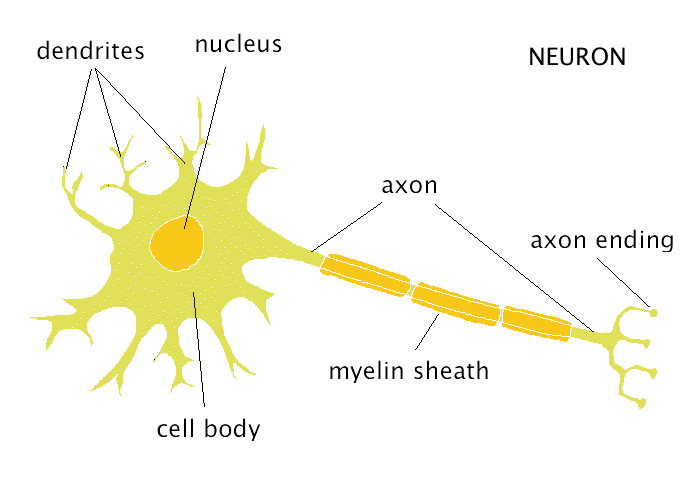
White matter denotes the area filled mostly with the dendrites and the axons of neurons, while the lump with the nucleus sits in the gray matter. Electrical impulses travel along those tentacles, a bit faster on those with a myelin sheath than along those without. Hence calling it cabling matter is quite correct. Without any cabling matter, our brains simply wouldn't work. But what are the effects if we are missing a bit here and there?
Everybody knows and loves cars. Imagine you are driving in winter time on an icy road. Something happens and you have to break. The foot presses onto a pedal, hydraulic pressure increases by that action and via brake lines is transferred to the wheels. Here, cylinders are expanding and moving brake pads onto disk or drums. Modern cars have ABS. This system has wheel speed sensors, which are connected to a controller by some cabling matters. Another set of cabling goes to valves. If everything works fine, this system will prevent the wheels from locking; and even on an icy road one maintains full control over the vehicle.
What we have here is a control system (the ABS) on top of another one (human - pedal - brake lines - brakes). Even newer cars have traction control and automatic brakes. The latter are intended to avoid rear-end collisions. Those are control systems on top of the other two. One can think of them as a hierarchy of control systems.
The brain is a more advanced version of that. Not only do we have neurons in our brains, we also have endocrine glands. In addition to that, our brain is getting rewired all the time. Our reflexes are like the simple brake system in cars, and everything else sits on top of it. Like the ABS in cars, those higher brain functions work like moderators.
Pretty often, questions with respect to mental illnesses are formulated as "What causes symptome X?" This type of questions shows the traces of the medical heritage, where viruses cause illnesses like influenza. Understanding the brain as a hierarchy of control circuits, one should rather ask "why aren't the emotions sufficiently moderated in bipolar disorders?"
I wonder, if missing white matter is responsible for that. The missing white matter discovery by James Cantor seems to be more important than commonly known. To my layman's eyes some psychological disorders look like missing some kind of moderation at some level. Often one reads the phrase "loss of control", which is similar to a car with a broken ABS on an icy road. If missing white matter were responsible, then we could find a treatment that rebuilds it. Missing white matter also rises the question, what prevented its growth in the first place? Already we suspect that children placed under lot of duress and stress during their childhood show long lasting mental damages later in life. It seems like higher hormonal values of cortisol and adrenaline might have had an impact. So how can we counter the effects?
If i were a benevolent dictator, i would initiate research programs:
- one for looking into the missing white matter indicator for certain disorders,
- another one in laboratories: what prevents and what encourages white matter growth.
Psychotherapy means learning on a rational and emotional level. Often it means to recognise signals of distress or to identify certain situations. Then "supporting thoughts" should aid us to get through the situation. From my personal experience i know that psychotherapy can be demanding and one gets a headache from them. Taking a paracetamol might be ill-advised, it could harm the establishment of new circuitry. If pharmacy had something else, something that would make white matter growth easier - maybe it could support traditional psychotherapy.
Disclaimer
I'm not a psychiatrist, neurobiologist, or psychologist. The views presented here are based on common knowledge, which might not be scientifically correct.
Google on "white matter disorder" gives several results, among other this, where the connection between white matter and bipolar disorder is mentioned.
Google on "white matter disorder" gives several results, among other this, where the connection between white matter and bipolar disorder is mentioned.
Addendum 2015-09-09: James Cantor reported the missing white matter, he also reported a lower IQ among his pedophile subjects. Glial cells are considered to be related to IQ, the more glial cells the higher the IQ. Glial cells provide the myelin sheathing of axons, hence contribute to white matter density. It could be as simple as JC has seen a lower IQ on his sMRI pictures.
Subscribe to:
Posts
(
Atom
)